Poland’s Airports Face a Turning Point. PPL Report Maps the Technological Shift
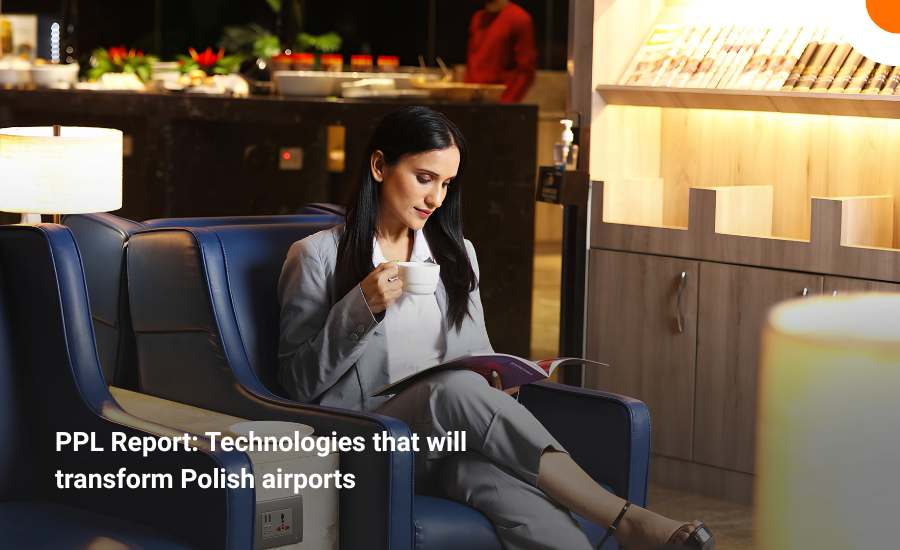
Polish Airports S.A. has released a comprehensive report outlining how new technologies will reshape airport operations in the coming years. The study focuses on artificial intelligence, automation and sustainability as key factors that can strengthen the position of Polish airports in an increasingly competitive European market.
The report, titled “The Future of Airport Technologies – Forecasts and Case Studies,” was prepared by Polish Airports S.A. in cooperation with experts from the Transport and Economy Advisory Team TOR. It examines global technological and organizational trends that already influence the planning, management and development of airport infrastructure.
According to the authors, modern technologies are no longer an optional upgrade but a fundamental condition for efficient airport operations. Digital solutions help airports manage passenger flows more effectively, improve security standards and reduce operating costs. At the same time, they support climate goals and contribute to a better travel experience.
The report presents airports not only as transport hubs, but also as spaces where innovation is tested and implemented on a daily basis. Many of these solutions, once proven, can be transferred to other sectors of the economy.
Six Areas That Will Shape the Airports of the Future
Experts from Polish Airports and TOR identify six key areas that will determine how airports evolve in the coming years.
The first is artificial intelligence, increasingly used to analyse data and optimise airport operations. AI systems support traffic management, security processes and passenger services, improving both efficiency and safety.
The second area is process automation. The report describes the growing role of autonomous baggage handling systems, robotics and self-driving vehicles, which speed up operations and reduce the workload on airport staff.
The third pillar is sustainable aviation fuel (SAF), an alternative to conventional jet fuel that helps reduce carbon dioxide emissions. Decarbonisation is identified as one of the top priorities for future airport development.
The fourth area is modern infrastructure, including intelligent energy management systems, 5G and Internet of Things networks, and facilities for electric vehicles. These investments aim to increase airports’ resilience to climate change and rising passenger traffic.
The fifth element is passenger experience. Digital identity solutions, biometric identification, mobile applications and self-service kiosks are designed to make the journey through the airport smoother, faster and more predictable.
The sixth and final area concerns workforce skills. The report stresses the importance of training, digital competences and change management skills, which are essential for the successful implementation of new technologies.
Poland’s Position in European Aviation
The significance of these changes is also highlighted by Maciej Lasek, Secretary of State at the Ministry of Infrastructure and the Government Plenipotentiary for the Central Transport Hub project. He points out that decarbonisation, transport integration and service quality will largely determine the role Polish aviation plays on the European map.
According to the report’s authors, Poland has an opportunity not only to adapt to these changes, but also to actively shape them.
Airports as Innovation Hubs
Representatives of Polish Airports S.A. emphasise that innovation is not the result of isolated projects, but of long-term, consistent action and cooperation across sectors. The case studies included in the report are intended as practical tools for decision-makers, planners and airport operators.
Experts from TOR underline that the publication is based on data, benchmarks and real-world implementations rather than abstract visions. The report is meant to serve as a roadmap for building intelligent, safe and sustainable airport infrastructure.
The publication is also an invitation to a broader industry discussion and joint efforts to modernise air transport in Poland.