European Parliament approves changes to the Package Travel Directive
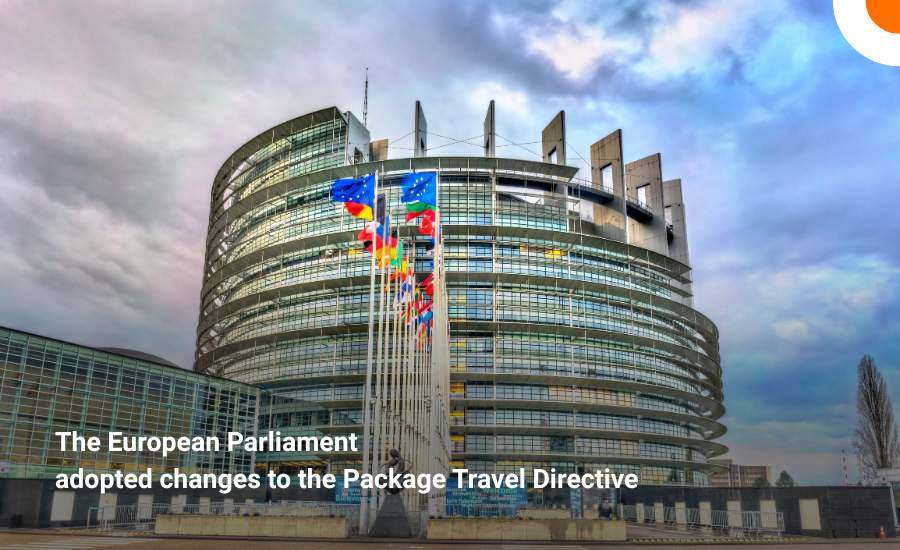
On 12 March 2026, the European Parliament approved revised package travel rules. The vote passed with 537 in favour, 2 against and 24 abstentions. The text still needs formal approval from the Council before publication in the Official Journal of the EU.
The revised directive clarifies what counts as a package, writes voucher rules into law and sets out when travellers can cancel without paying fees. It also fixes deadlines for complaint handling and for refunds paid from insolvency protection schemes.
When combined services will count as a package
One of the main changes concerns the definition of a package holiday. Parliament’s example focuses on online sales where linked booking processes combine services sold by different traders. Those bookings will count as a package if the first trader passes the traveller’s personal data to the other traders and contracts for all services are concluded within 24 hours.
The directive also adds an information duty for add-on sales. If an organiser invites a customer to book extra services, the customer must be told when those services will not form a package with the services already booked.
Voucher rules move into the directive
The updated text adds rules on vouchers that became widespread during the pandemic. Travellers will have the right to refuse a voucher and ask for a cash refund within 14 days. A voucher may remain valid for no longer than 12 months.
If a voucher expires fully or partly unused, the traveller must be refunded for the unused amount. Companies will also be barred from limiting the choice of travel services available to voucher holders. The Council’s text adds that vouchers will be covered by insolvency protection.
Wider cancellation rights for travellers
Under the current rules, travellers can cancel without charges if unavoidable and extraordinary circumstances arise at the destination. The revised directive extends that to events at the point of departure and to situations that could significantly affect the journey itself. Whether the threshold is met will be assessed case by case, with official travel advice serving as an indication.
For tour operators, that means more pressure to document the grounds for cancellations. For travellers, it widens the legal basis for a full refund, but it does not create an automatic right in every disruption scenario because the directive keeps the case-by-case test.
Complaint handling, refunds and insolvency
Organisers will have to acknowledge complaints within 7 days and provide a reasoned reply within 60 days. The standard 14-day refund deadline for trip cancellations remains unchanged.
If an organiser becomes insolvent, refunds for cancelled services must be paid from the insolvency guarantee within 6 months. That period may be extended to 9 months in very complex cases. Member states will have 28 months to transpose the directive into national law and another 6 months before the new rules start to apply.